HARVESTING
Our honey harvests are small-scale and seasonal. We typically harvest in the spring and, if the bees produce a surplus fall crop, again in the autumn.
Our hives are located in two apiaries in Hunterdon County, New Jersey. Our home apiary is just a few miles from the village of Ringoes NJ. We also maintain a small number of beehives at the Northwest New Jersey Teaching Apiary in Clinton Township NJ.
All of our honey is processed at home in small batches. After extraction, it is strained through fine mesh filters and bottled raw and unheated. Occasionally, we gently warm honey to make bottling easier or to reliquify crystallized honey. Even then, temperatures are kept below 110°F to preserve the natural character of the honey.
Crystallized Honey is Natural
If your honey crystallizes, don’t worry. Crystallization is a completely natural process and a sign that your honey has remained raw and minimally processed.
Honey is a supersaturated sugar solution, and over time the natural sugars begin to form crystals. Some varieties crystallize quickly, while others remain liquid for extended periods. The speed of crystallization depends largely on the floral sources visited by the bees, as well as storage conditions. Honey stored at cooler temperatures, particularly between 50°F and 60°F, will typically crystallize more quickly.
Many people enjoy honey in its crystallized form, but if you prefer it liquid, simply place the container in a warm water bath of approximately 110°F until the crystals dissolve. This temperature is considered safe, as temperatures within a beehive can naturally approach these levels during hot weather.
We do not recommend using a microwave to reliquify honey. Microwaves can create uneven heating and are far more aggressive than the gentle warming that honey requires.
Harvesting is a Labor of Love
Harvest season is one of the most rewarding parts of beekeeping, but it is also one of the most demanding.
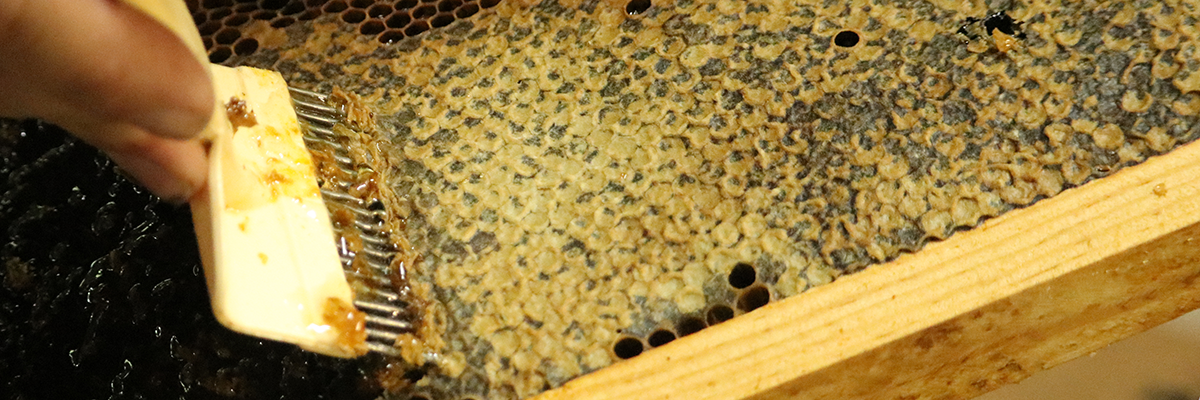
The process begins by removing honey supers from the hives and organizing them for harvesting. The wax cappings must then be removed from each frame before the honey can be extracted using a centrifugal honey extractor. Full honey boxes often weigh between 60 and 80 pounds, and much of the work is performed during the heat of summer. A single harvest can take many hours from start to finish.
While modern equipment helps, there is still no substitute for hard work, careful handling, and a little persistence.
Reaping the Reward
For all the effort that goes into caring for bees and harvesting honey, the reward is well worth it.
We may be a little biased, but few things compare to fresh, locally produced honey. In our home, it is a daily staple. We use it in coffee and tea, in cooking and baking, and anywhere a touch of natural sweetness is welcome.
Beekeeping requires time, patience, and plenty of hard work, but every jar represents the remarkable work of thousands of bees and the unique flowers they visited throughout the season. In the end, it is a sweet reward for both the beekeeper and the people who enjoy the honey.